
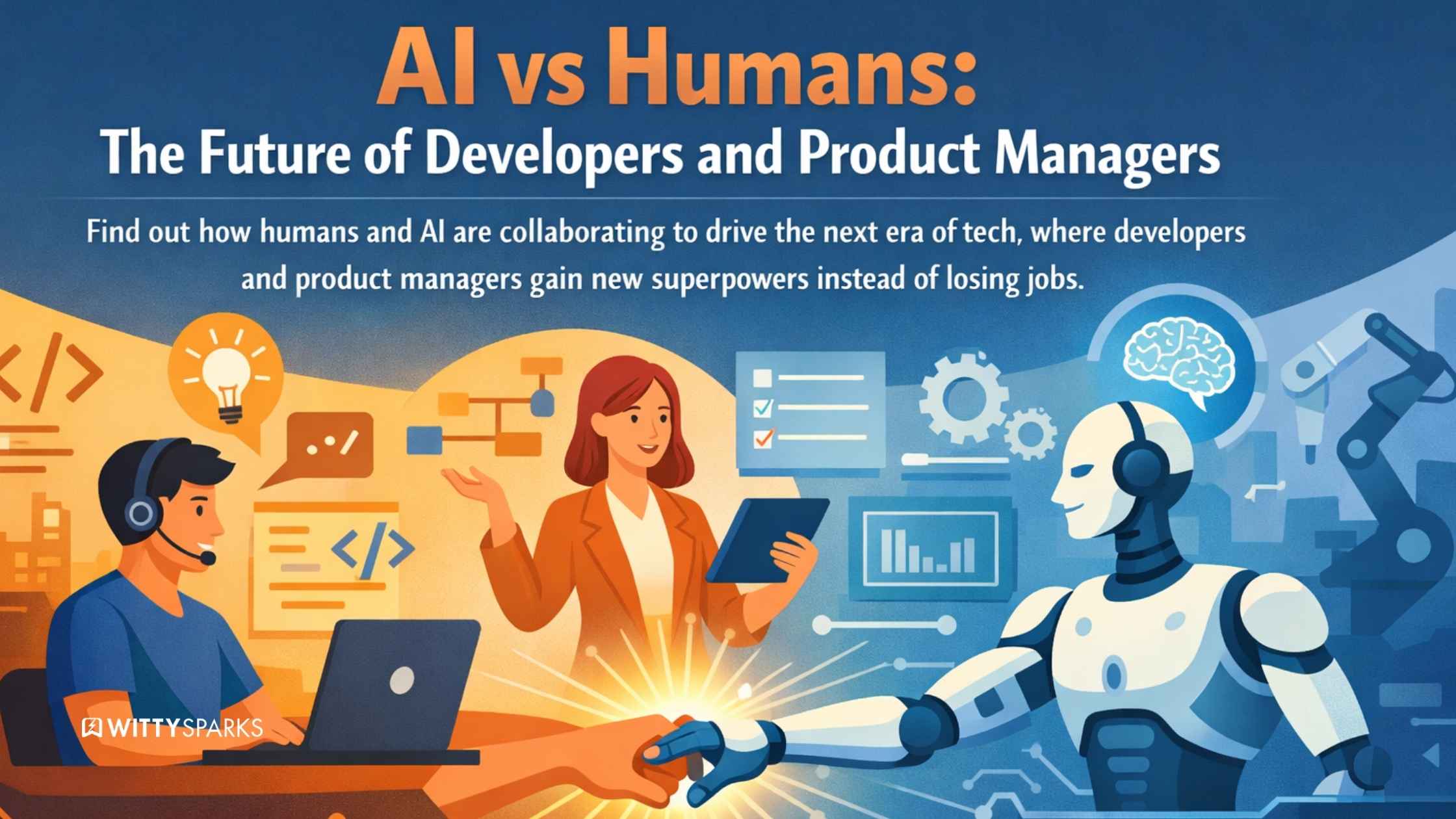

Have you ever wondered if most of your tasks will be automated? The era we’re entering now feels fundamentally different. Artificial Intelligence isn’t just enhancing workflows; it’s changing who builds software, how teams think about products, and what companies can achieve.
AI is reshaping software development and product management by automating tasks, repetitive tasks, accelerating code generation and testing, and improving decision-making. These changes lead to faster product development cycles, improved quality, and a more personalized user experience.
On this page
Do you know? According to research, the artificial intelligence market is set to grow from $314 billion in 2026 to $1339.1 billion by 2030. The provided data insights show why this is the perfect time to integrate artificial intelligence in software development and product management.
If you’re looking up how AI integrates in software and product management? How does it enhance workflow operations?…. You’re on the right page!! In this article, we have wrapped all the information about how AI is changing software and product management.
The Growing Role Of AI in Transforming Software Development and Product Management
In just a few years, AI’s role in software development and product management has drastically restructured the kinds of roles, responsibilities, and required skill sets organizations look for. This transformation has reduced the workloads of staff, which enables them to primarily focus on more specialized, high-value tasks and projects. Here are the key contributions of AI in software development and product development.
Code Generation and Assistance
According to a 2025 report, about 80% of global developers use AI when writing code. Thanks to large language models such as GitHub Copilot, CodeWhisper, and more general models like Claude. With the use of these models, developers can now generate functional code from natural language descriptions in a fraction of the time.
This assistance enhances productivity, boosts decision-making, and significantly speeds up development time.
Testing and Quality Assurance
Testing has also been revolutionized by AI-powered tools and bots, which can automatically generate test cases, detect bugs, and sometimes even self-heal tests that break due to UI changes.
Tools like Appium, Applitools, and Mabl use machine learning to maintain test suites, freeing up human testers for more complex scenarios.
AI in testing includes vast advantages, like improved efficiency, enhanced test coverage, and cost savings. The most effective teams use AI to augment their human testing skills, rather than replacing the contextual understanding and intuition that skilled QA professionals bring to complex systems.
Architecture and Design
Generative AI for product design increases the premium on good architecture and design rather than diminishing it. This made implementation easier; it has led to a greater importance of system design, interface definitions, and architectural boundaries.
The technology supports design products that efficiently meet operational requirements and deadlines, suited to changing consumer needs.
AI analyses vast datasets from past experiences, users’ behaviours, and performance metrics to recommend optimal architecture and design. This enhances data-driven decision-making and results.
Predictive Analytics
Predictive analytics helps to predict faults before they happen. This analytics helps in reducing downtime and increasing asset longevity.
Predictive analytics comes with AI analytics reports, where they can use usage patterns, previous performance data, and sensor data to forecast when maintenance or repairs are likely necessary.
Machine learning detects early red flag warnings. This enables prompt action and lowers the possibility of unexpected malfunctions. Overall, it enhances operational effectiveness, reduces costs, and enhances the equipment or product’s overall performance.
Personalized Product Experiences
Gen AI in product development helps personalize the user experience. An AI algorithm analyzes the data sets and patterns to determine unique tastes, propose customized product features, and suggest related items.
Let’s picture this: You’re watching a documentary film on Netflix, now AI understands your past watching history and searches, after scanning all your past experiences, the platform suggests mostly documentary films or series. Sounds cool, right!?
This personalized experience has advantages, including brand loyalty, customer satisfaction, and repeated business.
Rapid Prototyping and Iteration
Generative AI facilitates rapid prototyping and iteration. It enhances speeding up the development cycle, a cost-effective approach. Rapid prototyping of AI products allows your team to quickly test the idea, identify errors, and resolve them early.
Examples of AI in Software Development and Product Management
AI is reshaping product management and software development, with real-world applications delivering significant results. The following lists highlight how companies are leveraging AI to improve decision-making, optimize operations, and improve customer satisfaction.
Netflix
Netflix AI-driven recommendations engine personalizes content by analyzing users viewing patterns, preferences, and ratings. Machine learning algorithms track millions of data points, offering tailored suggestions according to your past searches and views. This personalized approach ensures that subscribers always find new content to enjoy.
Airbnb
Airbnb uses AI to adjust rental pricing in real-time, considering factors like demand, location, and competition. Machine learning models analyse booking trends and market conditions to optimize pricing, helping hosts maximize earnings while keeping rates competitive for guests.
Spotify
Spotify AI personalizes music recommendations by analysing users’ frequently listened to songs, social media activity, and trends. By analyzing all, the platform creates “Discover weekly”, which ensures they are continuously exposed to new content they enjoy. This personalized feature keeps users engaged and increases retention.
Amazon CodeWhisper
Amazon Codewhisper is a generative AI-powered coding companion that provides real-time, contextual code suggestions to developers directly in their IDE. It helps developers write code faster by generating code and suggesting solutions to common coding challenges.
CodeWhisper is free to use for generating code. You can simply sign up with an AWS builder ID based on your email address. The individual Tier provides code recommendations, reference tracking, and security scans.
Tabnine
It’s another AI-powered code assistant that supports developers to write code faster, provides context-aware code completions, suggestions, and even full functions. It differs from several code assistants in that it reduces syntax and logical errors during the coding process, enhances privacy and security, and supports a wide range of programming languages, including JavaScript, TypeScript, Ruby, and Java.
Is AI Replacing Developers and Product Managers?
The answer is No!!!… AI isn’t stealing their chairs; it’s just enhancing their productivity, with minimal cost-effectiveness.
Let’s picture this: AI as the Iron Man suit: powerful, automated, analytical … but without Tony Stark, it’s just a metal piece and wire. So, developers and product managers bring the vision, creativity, and intuition that machines don’t have.
Ya… AI indeed writes code faster, which allows developers to enhance their productivity. But AI can’t be creative and think innovatively as product managers do. So, overall, AI can’t replace those who are empowered with skills, understanding, and who don’t purely rely on AI.
Because at the end, we are the only ones who have made machines, it works by studying the data that we have provided and integrated. It delivers results by studying our data only.
So, no AI is not here to replace them. It’s here to upgrade the systems.
The future belongs to those who fear AI, but partner with it, like a trusted teammate who never sleeps and always knows the best code snippet.
Conclusion
AI use cases in software development services and product management are transforming how teams code, test, deploy, and maintain applications. AI in software development and product management is like a cornerstone, from automating tasks to predicting maintenance, the impact is measurable and fast-moving. So, ensure that your next project includes generative AI, to keep your project at the forefront!!

Read more from Technology