
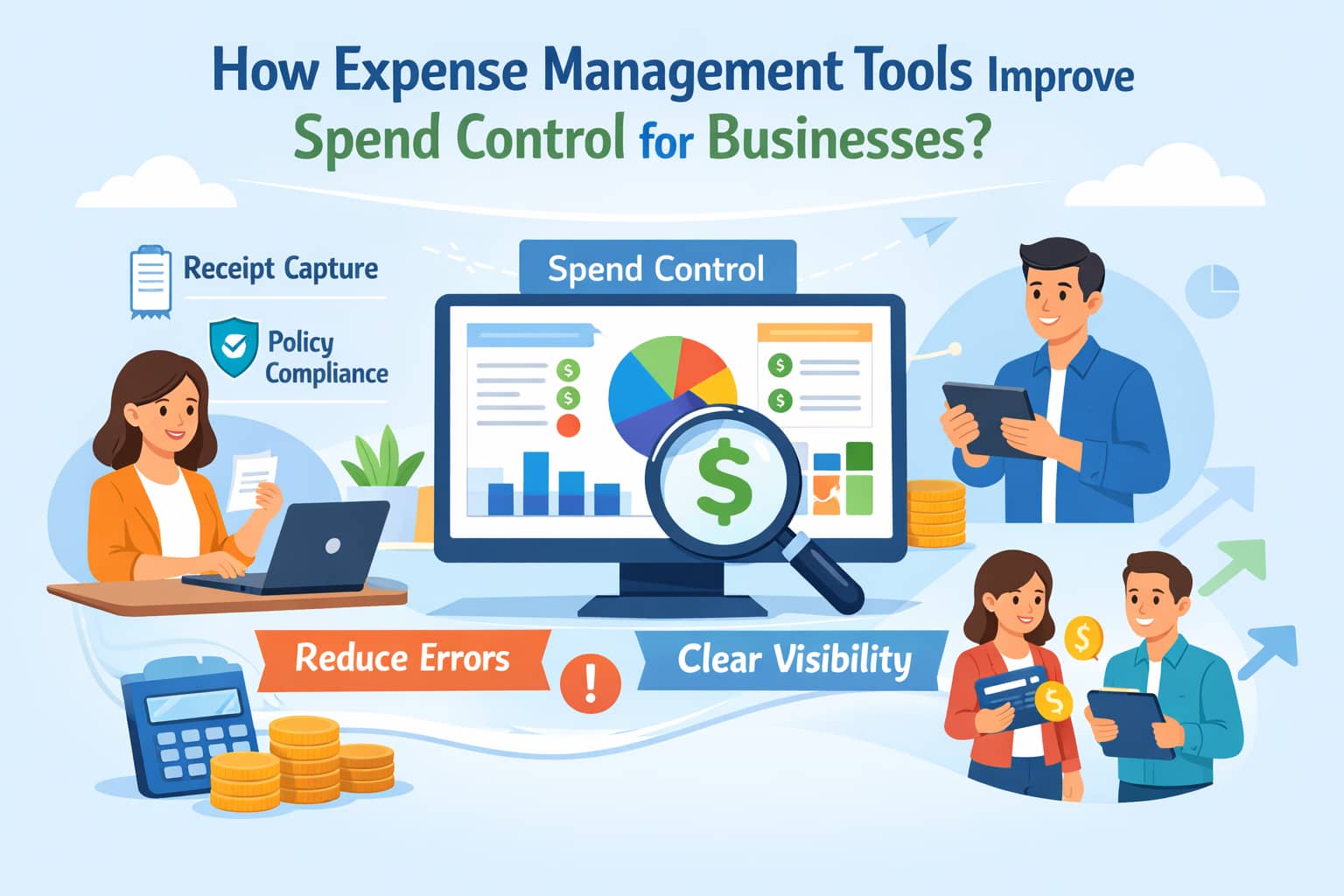

Due to the amount of travel, supplies, food, and other expenses incurred while growing teams, businesses are now faced with increased operational costs. The majority of these expenses are recorded on various platforms (i.e., email, chat, paper receipt, spreadsheet) and are, therefore, very difficult to track and manage without an effective Expense Management Tool.
On this page
Finance teams often chase receipts, match numbers, and fix mistakes. Leaders also struggle with unclear reports and slow updates. When expense data is scattered, it becomes hard to see where money goes and how much the company actually spends. In many finance teams, manual expense reviews remain one of the most time-consuming monthly tasks.
This is why many businesses now use expense management tools, expense manager apps, and online expense software. These tools bring all expenses to one place, make entries simple, apply company rules, and give a clear view of spending at all times.
Strong spend control is not only about cutting costs. It also brings clarity, discipline, and better planning. With modern spend management systems, every expense stays recorded, checked, and aligned with business needs.
What is Expense Management and How Software Helps?
Expense management is the way a business tracks and organises money spent for work. This includes the cost of travel, meals, office items, fuel, and other day-to-day expenses. In many companies, expense details are spread across spreadsheets, paper bills, messages, and different files. This often leads to missing receipts, wrong totals, and confusion.
Expense management software offers one central space for all expense details. Receipts stay in one system, policy checks stay consistent, and spending information stays visible through simple dashboards. This creates a clear picture of company-wide expenses without the usual mix of disconnected files and handwritten notes.
A mobile expense manager app adds instant capture of receipts, quick uploads, and clean storage. No paper piles, no misplaced bills, and no confusion during reviews. Finance teams receive neat summaries, organised lists, and easy-to-read reports.
With all information in one place, businesses gain clearer tracking, smoother reviews, and stronger control over overall spending – the entire process shifts from scattered and uncertain to structured and easy to follow.
Key Features and Benefits of Expense Management Software
Modern expense management software offers a set of tools that bring order, clarity, and structure to business spending. Each feature supports better expense tracking, cleaner records, and stronger control.
- Real-time tracking and visibility: All expenses appear in one dashboard. Amounts, categories, dates, and teams stay easy to view. This gives finance teams a clear picture of spending at any moment.
- Digital receipts and OCR: Receipts stay stored as images. OCR captures key details such as amount, date, and merchant information, reducing the need for manual entry and lowering the risk of lost paper receipts.
- Simple approval flows: Managers view expense details in one place. Approvals follow set rules, so delays are reduced, and confusion stays low.
- Policy checks and controls: Company rules stay applied automatically. Any out-of-policy amount shows up clearly. This keeps spending clean and consistent.
- Reports and analytics: The system offers charts, summaries, and patterns. Finance teams see high-spend areas, repeated claims, and monthly trends with ease.
- Mobile expense manager app: A mobile app allows quick receipt uploads, instant entries, and stress-free tracking from anywhere. Employees stay organised without extra effort.
Benefits for Businesses
- Clear visibility into spending across teams and locations
- Fewer errors due to digital records and automated checks
- Faster review cycles with simple approvals
- Better compliance with company rules
- More accurate budgeting and planning
- Less time spent on paperwork and manual matching
By combining these features, expense management software creates a structured, transparent process where every expense stays clear and easy to understand.
How Expense Management Tools Improve Spend Control?
Expense management tools bring clarity and order to business spending. With one system for all expenses, businesses gain better control, fewer surprises, and a more predictable flow of costs.
- Clear and Accurate Records: Expense details sit in one platform instead of scattered emails or paper slips. This reduces confusion and keeps all information neat and easy to read.
- Lower Errors and Mistakes: Digital receipts, automatic data capture, and simple checks reduce common issues like wrong entries, missing details, or mismatched numbers.
- Stronger Policy Compliance: Company rules stay active inside the system. Any expense outside the approved limits gets flagged, which keeps spending aligned with internal guidelines.
- Real-Time Spend Visibility: Dashboards show where money goes, who spends it, and how much each team uses. This helps finance teams make decisions with clearer data.
- Better Control Over Budgets: With organised expense patterns and consistent reporting, budgets stay easier to plan and follow. No last-minute shocks and no unclear totals.
- Reduced Fraud and Duplicate Claims: The system spots repeated entries or unusual amounts, which helps reduce false claims and keeps the process clean.
Travel Expense Management and Its Role in Spend Control
Travel expenses often form a large part of company spending. Flights, hotels, local transport, and meal bills create many small entries that can easily go out of order.
A travel expense management system keeps all trip-related details in one place. Receipts stay linked to each journey, approvals stay clear, and travel rules stay applied automatically. This helps reduce unnecessary costs and brings better discipline to travel spending.
How to Choose the Right Expense Management Software?
Selecting the right expense management software depends on a few key factors. A good tool offers clarity, control, and comfort for both employees and finance teams.
- Ease of Use: The platform should feel simple. Clean screens, clear steps, and an easy layout help everyone move through the system without confusion.
- Mobile App Availability: A strong mobile expense manager app allows quick receipt capture and smooth entries during travel, client visits, or field work. No delays and no paper slips.
- Policy Support: Company spending rules should stay built into the system. Limits, categories, and approval paths remain clear and consistent at all times.
- Real-Time Visibility: Dashboards and summaries offer a steady view of spending patterns. No waiting, no scattered information.
- OCR and Automation Features: Receipt scanning, automatic data reading, and quick checks reduce effort and keep entries clean. Fewer mistakes, fewer gaps.
- System Integrations: Smooth connection with accounting tools, HR systems, and company cards ensures better flow of information across teams.
- Security and Compliance: Strong protection for financial data is essential. The software should follow industry standards and keep all records safe.
With these factors in mind, companies gain a simple and reliable way to compare tools and choose the most suitable expense management solution.
Why Businesses Shift to Automated Spend Management?
More companies now move toward automated spend management because manual processes create delays, confusion, and hidden costs. Automated systems offer cleaner data, steadier visibility, and stronger control over everyday spending.
Need for Faster and Clearer Expense Handling
Manual expense work often involves paper receipts, long approval chains, and repeated back-and-forth. This slows finance teams and creates unclear records.
Verified Insight: According to Emburse’s 2023 Travel & Expense Trends Report, 82 percent of employees still rely on manual steps, which often results in slow and inconsistent reporting. (Source: Emburse – emburse.com)
Higher Visibility Across Teams and Locations
With spending spread across multiple teams, companies need a unified view. Automated systems offer clearer dashboards and organised summaries.
Verified Insight: Aberdeen Group notes that companies with automated expense systems enjoy 60 percent faster processing times compared to manual methods. (Source: Aberdeen – aberdeen.com)
Lower Processing Costs and Fewer Errors
Manual expense handling often comes with repeated mistakes, missing details, and high processing costs. Automated tools help reduce these issues by creating clean, digital records.
Verified Insight: A GBTA & HRS study shows that manual expense processing costs businesses an average of $58 per expense report, which increases total operational cost. (Source: GBTA – gbta.org)
Another Emburse Benchmark Report found that automation leads to 55 percent fewer expense errors. (Source: Emburse – emburse.com)
Conclusion
Strong spend control stands as a key requirement for all businesses today. With teams in many locations and expenses coming from travel, supplies, fuel, and daily tasks, scattered records often create confusion, missing details, and unclear totals. Manual systems usually leave gaps that finance teams struggle to fill.
Expense management tools place everything in one organised space. Receipts stay safe, policies stay visible, and spending stays easy to understand through clear dashboards. Automated checks, tidy summaries, and steady visibility help reduce errors and improve budget control.
Travel spending also becomes more orderly with linked receipts and fixed rules. Overall, automated expense systems offer a cleaner, more predictable approach to handling company costs.
For businesses seeking clarity, discipline, and better insight into spending, a modern expense management system becomes a steady and reliable choice.
Featured image is created using ChatGPT.
Read more from Finance
- How Expense Management Tools Improve Spend Control for Businesses?
- Why Tight Spreads on Major Currency Pairs Matter to Traders?
- Mortgage refinance: What is it and how does it work?
- Is it Legal to Set Up a Trust Fund to Avoid Inheritance Tax?
- What You Need to Know About a W-2 Form?
- AI in Finance: Top Opportunities for Tech Startups in 2023
- How Financial Advisors Maximize Technology?
- The Psychology Of Money By Morgan Housel Book Review
- How Many Savings Accounts Should You Have and Why?
