
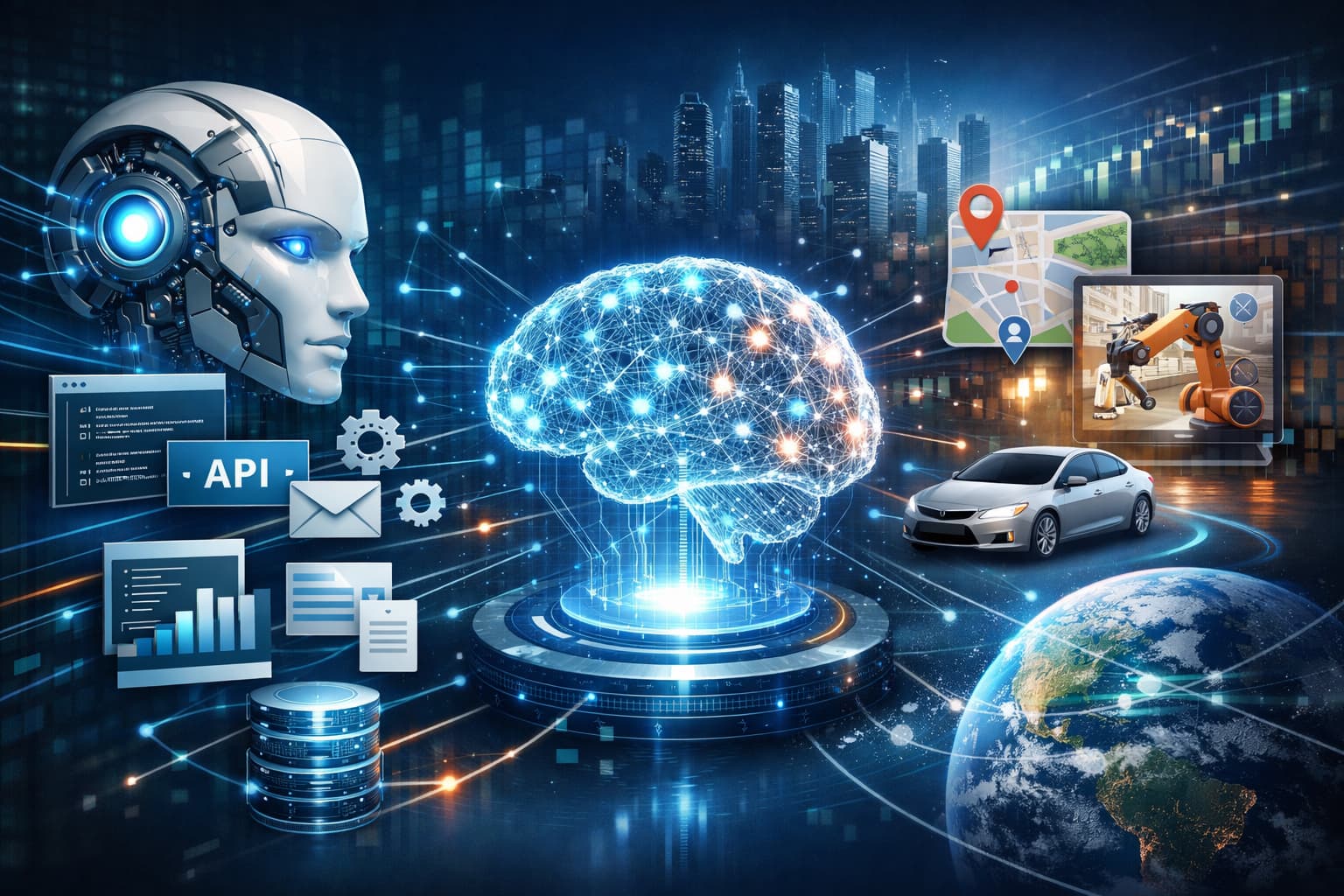

Companies gather huge volumes of information on a daily basis. They run several software systems, cloud platforms, and internal tools. However these resources often remain separated, which slows down decision-making and operational speed.
This challenge has encouraged many organizations to explore agentic AI services that connect systems and perform tasks automatically.
Agentic AI represents a shift from passive AI models that simply generate answers. These systems monitor targets, strategize activities, communicate with software applications, and execute activities in digital space. Incorporating the integration of Agentic AI, businesses connect APIs, business applications, and data sources in a manner that AI agents will perform work in practice.
On this page
For business proprietors and technology leaders, this technique opens the door to automation that moves beyond simple chatbots or static analytics.
What Is Agentic AI?
Artificial intelligence systems that can plan and implement multi step actions are called agentic AI. The system does not work in isolation to generate suggestions, but it communicates with other digital tools to accomplish tasks.
An agent receives a goal. It examines the available information, select the required tools or APIs, and takes actions to advance the work.
For example:
- Collecting data from internal platforms
- Sending instructions to business software
- Triggering workflows through APIs
- Monitoring results and adjusting steps
These systems combine reasoning, automation, and system connectivity. Many agentic AI services rely on large language models paired with orchestration frameworks that coordinate tasks across digital infrastructure.
The Role of APIs in Agentic AI Systems
APIs form the foundation of modern software communication. They allow different platforms to exchange information or trigger actions.
AI agents linked to APIs of various platforms, including CRM systems, analytics tools, cloud storage, or marketing platforms, through the integration of the Agentic AI.
For example, an AI agent can:
- Retrieve customer data from a CRM through an API
- Analyze that data using internal models
- Send personalized campaign instructions to a marketing automation platform
- Track campaign performance through analytics APIs
Without API connectivity, AI would remain limited to generating insights. With APIs, it executes tasks across real software systems.
How Agentic AI Connects Business Tools?
Businesses operate with many digital tools. Sales platforms, support software, financial systems, and marketing platforms often exist as separate environments.
Agentic AI integration connects these systems through automation layers. AI agents identify which tool supports each step of a task and interact with those platforms using APIs or automation frameworks.
Examples of tool interaction include:
- Updating customer records in a CRM
- Scheduling tasks in project management software
- Triggering support responses in helpdesk systems
- Managing reports in analytics platforms
A single AI agent can coordinate actions across these systems, saving employees hours of manual work.
Data as the Decision Engine
Data fuels every action taken by an AI agent. The system studies available datasets before selecting the next step.
In many organizations, data exists in different locations such as:
- Cloud databases
- Customer platforms
- Internal dashboards
- Operational software systems
With proper Agentic AI integration, agents access these sources through secure connectors and APIs.
Once data becomes accessible, the agent can:
- Detect patterns
- Predict outcomes
- Trigger automated actions
For business owners, this leads to faster decision cycles and fewer manual processes.
Real-World Applications of Agentic AI
Companies across industries have begun experimenting with agentic AI services for practical operations.
Customer Support Automation
AI agents monitor incoming requests, gather information from support systems, and suggest or deliver responses. They can update ticket systems, retrieve account data, and guide users through solutions.
Security Monitoring
AI agents are used to analyze the logs of the systems, identify suspicious activity, and trigger automated responses or notifications on cybersecurity sites.
Sales Workflow Automation
AI agents collect lead information, score prospects, and update CRM records. They may even schedule meetings or generate outreach messages.
Operational Reporting
Agents access databases, create performance summaries and share reports among teams.
These examples show how AI systems move from analysis to direct action.
Why Businesses Are Exploring Agentic AI?
One of the usual problems which business owners are confronted with is as follows: different systems, big amounts of data, and low efficiency in the operational process.
An intelligent automation can resolve this problem with agentic AI services. Rather than depending on human interactions among departments or software, AI agents coordinate the actions on platforms.
Key benefits include:
- Faster operational workflows
- Reduced manual data entry
- Improved decision support
- Stronger integration across business systems
Companies that embrace the implementation of Agentic AI integration have acquired a structure in which AI communicates with tools, information, and applications as a part of everyday processes.
Final Thoughts
AI has moved beyond generating answers. Businesses now seek systems that execute tasks across their digital infrastructure. This change describes why there is an increasing interest in agentic AI services that bridge APIs, tools, and data sources.
Through the procedure of smooth integration with Agentic AI, corporations build smart systems that can monitor activities, manage information, and perform operations on business platforms.
As business leaders look to automate business processes, enhance operational effectiveness, and realize the value of systems interconnected, agentic AI is a viable next stage.

Read more from Technology