

Key Takeaways
- A backlink passes authority and referral traffic; a citation confirms business identity via NAP consistency.
- Local businesses (dentists, plumbers, restaurants) should prioritise citations first, then earn relevant local backlinks.
- National or SaaS brands rely far more on backlinks than on directory citations.
- According to Whitespark’s 2023 Local Search Ranking Factors report, citation signals remain a top local pack ranking factor.
- Unlinked mentions carry brand-recognition value and can often be converted into backlinks through outreach.
Talk to ten website owners about links vs citations, and the discussion usually turns messy very quickly. Someone says citations are the same as backlinks. Another person insists that backlinks alone drive rankings. Then someone throws brand mentions into the mix.
Suddenly, the whole topic of links vs citations becomes confusing.
On this page
If you have spent even a little time reading SEO forums or talking to agencies, you must have seen this happen too. People mix up links vs citations, confuse citations vs backlinks, and sometimes throw citation vs mention into the same bucket. Everything starts sounding the same.
Here is the problem. These signals do not do the same job.
- A link points from one webpage to another and passes topical context.
- A citation confirms a business identity across the web.
- A mention simply talks about the brand somewhere online.
Yet when people plan SEO campaigns, they treat these signals as if they were interchangeable. That misunderstanding sits right in the middle of the links vs citations conversation.
I see businesses push their site into hundreds of directories, thinking they are building authority. I also see the opposite. Someone focuses only on backlinks while ignoring local SEO citations completely. Both approaches miss the bigger picture behind links vs citations.
In this blog, I will break down the difference between the two for you. So without wasting much time, let’s get started.
What Is a Link in SEO?
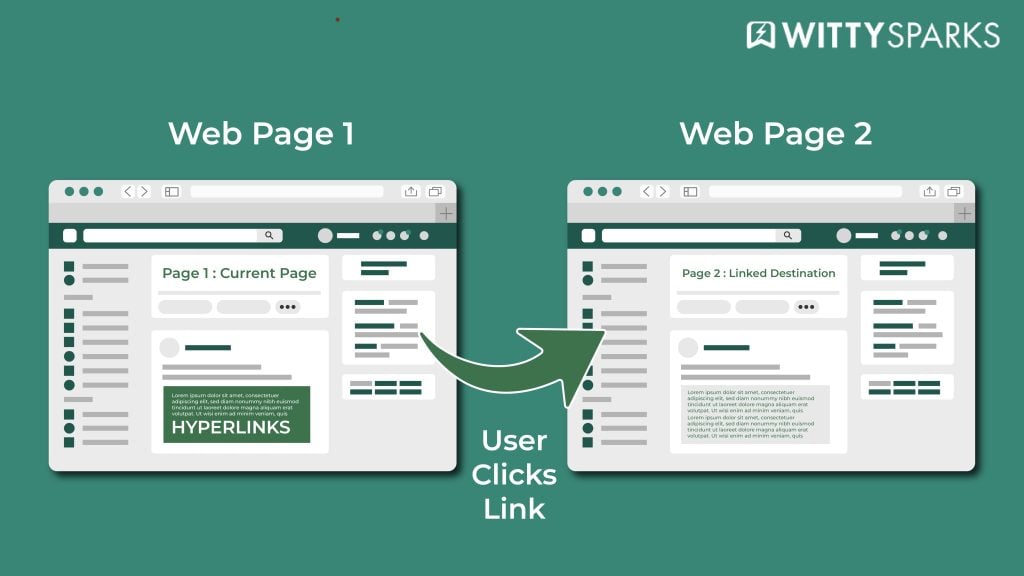
A link, also called a hyperlink, connects one webpage to another. Click it, and you move from one page to the next. That simple mechanism drives the entire internet. Without links, the web would feel like a stack of disconnected documents.
Now, when people talk about link vs citations, they usually mean backlinks. A backlink appears when another website links to your page.
That is the basic answer to the question what is a backlink in SEO. A backlink is simply a hyperlink from another website pointing to yours. Search engines read that connection and learn something about the relationship between the two pages.
This is where things get interesting.
Every backlink carries a different value. I see people chasing hundreds of links without ever looking at where those links come from. But search engines look at things like:
- Is the linking website related to your topic?
- Is the linking site credible?
- Does the link appear naturally inside the content?
- Does the surrounding text explain why the link exists?
These are the factors that decide how search engines interpret backlinks.
Let’s take an example of a stationery store. Let’s say it receives a backlink from a school supplies distributor. That connection makes sense. Both businesses serve similar audiences. Someone reading about school supplies might easily want stationery products.
But what if the same stationery store starts receiving links from blogs talking about the beach resorts? Technically, the link exists. But for obvious reasons, the connection feels odd. Readers exploring travel destinations are rarely looking for office supplies.
You must have seen something similar while reviewing backlink reports. One strong link from a niche site can bring more value than dozens of random directory links.
That difference also helps explain hyperlink vs citation.
A hyperlink is like a direct pathway between two pages. It passes context and sometimes sends visitors directly to your website. And citation? Well, you can mention your business without any clickable link. That is why backlinks vs citations behave differently in SEO.
And one more thing. Backlinks create something very important, TRAFFIC!
Someone reads an article, notices the link, clicks it, and lands on your website. That visitor arrived because the link created a bridge between two pages.
Let me show two quick examples in the link vs citation discussion.
Strong backlink example:
There’s a marketing blog that talks about keyword research strategies. It references a detailed SEO case study. And the writer has linked to the study inside the article. The topic fits, the audience fits, and the link appears naturally. This is what Google’s Search Quality Evaluator Guidelines call a Strong Backlink.
Weak backlink example:
A generic directory lists hundreds of websites from completely different industries. Each listing appears as a plain link in a long list. No explanation. No context. Inside the links vs citations conversation, those links add very little meaning.
What Is a Citation in SEO?
Now, let us get to the second half of the link vs citations discussion: citations.
If backlinks connect webpages, citations talk about businesses.
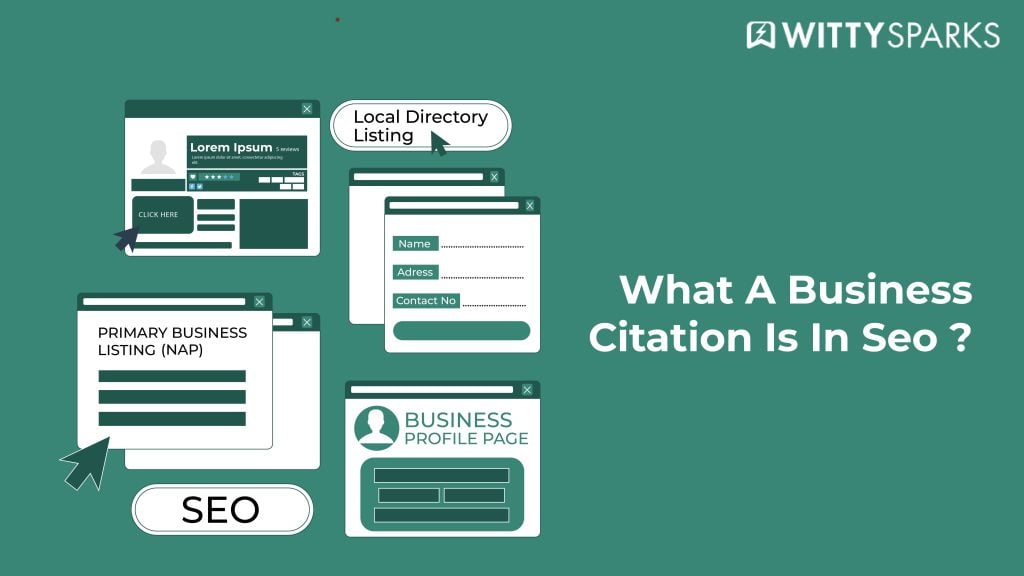
Here’s a simple example that might help you understand citations: a citation is an online reference to a business. That reference usually includes three basic pieces of information.
- Business name
- Address
- Phone number
In SEO we usually call this as NAP. Name. Address. Phone.
You have definitely seen this before, even if you never thought about it in terms of links vs citations. Think about a Google Business Profile listing, a Yelp page, a Justdial entry, or a chamber of commerce directory. Those pages display a company name, its location, and contact information. That listing becomes a citation.
This is where business citations SEO enters the picture.
Google’s local search algorithm uses NAP consistency as a trust signal, as outlined in Google’s How Search Works documentation. When the same name, address, and phone number appear across multiple trusted websites, search engines gain confidence that the business exists and operates in that location.
That consistency becomes one of the core signals behind local SEO citations.
Now, here is something that confuses people when discussing links vs citations.
A citation does not always include a clickable link.
Sometimes it does. Sometimes it does not.
Another easy way to understand links vs citations is by looking at two types of citations.
Structured citations
These appear on websites designed to list businesses in a standard format. The layout looks predictable. Business name, address, phone, website, category, maybe some reviews.
Examples include:
- Google Business Profile
- Yelp
- Yellow Pages
- Justdial
- industry directories
These listings form the backbone of local SEO citations because search engines can easily read the information and match it across platforms.
Unstructured citations
These appear naturally inside content rather than inside a directory listing. The business may show up inside an article, a blog post, a press release, or an event page.
For example:
- A news article mentioning a restaurant
- A blog post referencing a local law firm
- An event page listing sponsors
These still count inside the links vs citations ecosystem because they reference a business identity. Sometimes they include links. Sometimes they do not.
I see many business owners underestimate citations because they focus only on backlinks. But when the conversation shifts toward local SEO citations, citations suddenly become very powerful.
Here is why.
Local search depends heavily on identity signals. Search engines need to confirm that a business operates in a specific city or region. When the same NAP information appears across directories, review platforms, and community websites, that consistency strengthens trust.
That is why business citations SEO plays a much bigger role in local search than in national search campaigns.
If someone runs a local dental clinic, restaurant, or plumbing service, citations often form the base layer of their online presence. Backlinks still help, of course. But citations provide the identity signals that support local backlinks and other local ranking factors.
Links vs Citations: What Is the Difference?
Now we reach the part where most confusion happens: links vs citation itself.
At first glance, links and citations can look similar. Both involve websites referencing another website or business. Both appear across articles, directories, and blogs. That similarity is exactly why people mix up links vs citations and citations vs backlinks.
But their purpose inside search systems differs quite a bit.
When another website links to your page, it creates a backlink. Inside the links vs citations discussion, backlinks pass signals about authority and topic relevance. They also create a pathway for visitors to reach your website. Someone reading an article may click the link and land on your page.
This is why Google’s Search Central documentation and Moz’s Beginner’s Guide to SEO both emphasize what is a backlink in SEO. Backlinks help search engines understand relationships between websites. They also drive referral traffic from the linking page.
Citations behave differently.
A citation confirms that a business identity exists and operates in a certain location. Instead of passing authority between webpages, citations validate business information across the web. That is why local SEO citations focus on NAP consistency.
Inside the broader links vs citations ecosystem, citations answer a simple question for search engines.
Does this business exist?
If the same name, address, and phone number appear across many credible websites, the answer becomes clearer.
Another point that often confuses people in the links vs citations discussion is that a citation can include a link. Many directory listings show the business website along with contact details.
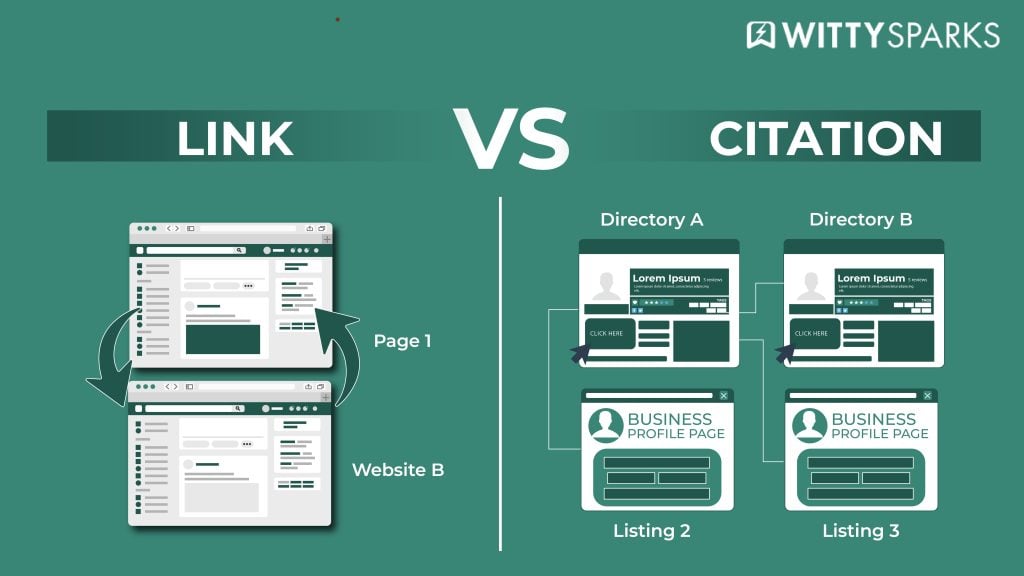
But even when a link appears inside the listing, the entry still functions primarily as a citation. Its main purpose is to confirm business identity rather than pass topical authority.
This is why the comparison between backlinks vs citations remains important for SEO strategy.
- Links help search engines understand content relationships.
- Citations help search engines confirm business identity.
Here is a quick comparison to make the difference clearer:
| Factor | Links | Citations |
| Primary role | Connect webpages and pass authority | Confirm business identity |
| Clickable element | Always clickable | Sometimes clickable |
| SEO focus | Authority, relevance, and traffic | Local identity and trust |
| Typical location | Blogs, articles, resource pages | Directories, listings, review sites |
| Role in links vs citation | Authority signal | Identity signal |
Where Do Mentions Fit In?
Now, let us add another piece to the links vs citations discussion that many people forget about: mentions.
You must have seen this happen.
- A news article talks about a company.
- A forum thread references a brand.
- Someone on a blog writes about a business experience.
- The brand appears in the text, yet there is no clickable link. That right there is a mention.
Inside the broader links vs citations ecosystem, a mention simply means a business or brand appears somewhere online. The website talks about the company but does not necessarily link to it, and does not always include full NAP details either.
This is where people start mixing things up in the links vs citation discussion.
Let us quickly separate the three:
- A backlink: A website links directly to another page using a clickable hyperlink.
- A citation: A website lists business identity details like name, address, and phone number. Sometimes a link appears, sometimes it does not. In the links vs citations conversation, the listing mainly confirms identity.
- A mention: A website talks about a brand without necessarily linking to it or listing NAP information.
You will notice that all three signals appear across the web, which is why people often confuse citation vs mention or even mix them with backlinks vs citations.
Now here is the interesting part of the links vs citations conversation.
Many people assume mentions have no SEO value because they do not include links. That assumption misses how search engines understand brand signals.
When a business name appears across trusted websites, news articles, or discussion platforms, search engines notice the pattern. Those references contribute to brand recognition across the web. That recognition strengthens trust signals around the business.
For example, imagine a restaurant mentioned in several local news articles, food blogs, and community event pages. Even if some of those mentions do not include links, they still reinforce the restaurant’s presence online. Within the broader links vs citations ecosystem, those mentions support visibility and credibility.
Mentions also create another opportunity inside the links vs citations framework.
Sometimes an unlinked mention can later become a backlink.
An SEO team may notice that a blog mentioned their brand without linking to it. A quick outreach email can often turn that mention into a clickable link. That small change moves the signal from citation vs mention territory into backlinks vs citations territory.
When Links Matter More Than Citations?
Now, here is something many people miss in the links vs citations discussion.
Not every business relies on citations equally.
For some industries, backlinks drive a much larger portion of SEO performance. These businesses usually operate nationally or globally rather than inside a single city.
Let us look at a few examples:
SaaS companies
Software companies live and breathe backlinks. Their visibility comes from blog content, product comparisons, industry guides, and technical articles. In this environment, links vs citations tilts heavily toward backlinks.
A SaaS platform ranking for project management tools, analytics dashboards, or automation platforms depends on links from tech blogs, review sites, and industry publications.
Local SEO citations play a smaller role because the audience is not searching for a physical office.
In these cases, the links vs citations balance leans strongly toward link authority.
E-commerce brands
E-commerce websites also rely heavily on backlinks. Product reviews, buying guides, affiliate blogs, and influencer articles create backlinks that bring both authority and traffic.
When discussing links vs citations, e-commerce brands usually benefit more from local backlinks and editorial links than from large numbers of directory listings.
A tech blog linking to a headphone product page often brings more value than dozens of citations.
National service companies
Some businesses operate across an entire country rather than a single city. Think about digital agencies, consulting firms, or online education platforms.
These companies still appear in the links vs citations conversation, yet backlinks play a bigger role because their customers come from multiple locations.
Industry publications, podcasts, and thought-leadership articles create strong signals in the backlinks vs citations discussion.
Content-driven brands
Media websites, niche blogs, and information platforms rely heavily on backlinks. Their content earns links from other websites referencing research, guides, or statistics.
Inside the links vs citations ecosystem, this type of SEO strategy focuses almost entirely on backlinks.
For these businesses, the comparison between hyperlink vs citation becomes very clear. Hyperlinks spread authority across the web, while citations provide minimal impact for national ranking goals.
When you step back and look at the bigger picture, you start seeing a pattern inside the links vs citations discussion.
When Citations Matter More Than Links?
Now, let us flip the situation.
Some businesses operate almost entirely within a city or region. For them, the links vs citation balance shifts toward citations.
Local identity becomes the priority.
You will see this pattern across many service industries.
Dentists
Dental clinics rely heavily on local SEO citations.
Listings across Google Business Profile, health directories, and review platforms help confirm that the clinic operates at a specific address. When search engines see the same NAP details repeated across trusted platforms, the clinic becomes easier to surface in local searches.
In the links vs citation discussion, citations form the base layer for these businesses.
Lawyers
Law firms show a similar pattern.
Legal directories, local bar association listings, and review platforms contribute to business citations SEO. Those citations reinforce the firm’s identity within a specific location.
Backlinks still help, especially from legal publications or news sites. But the links vs citation balance often begins with strong citations.
Plumbers and local contractors
Trades businesses such as plumbers, electricians, and roofers depend heavily on local discovery.
Customers usually search for services within their city. Because of that, local SEO citations across directories and review platforms become essential signals.
Inside the links vs citation ecosystem, consistent NAP information across platforms strengthens local trust signals.
Restaurants
Restaurants rely heavily on listings and review platforms.
TripAdvisor, Yelp, Google Business Profile, and local food directories contribute to business citations SEO. These listings confirm location, opening hours, and contact details.
When discussing links vs citation, restaurants often gain visibility through citations and mentions across local media rather than large numbers of backlinks.
Real estate agents
Real estate professionals also benefit heavily from citations.
Listings on property platforms, local directories, and brokerage websites contribute to local SEO citations. Those signals confirm the agent’s location and market focus.
Backlinks still contribute to the links vs citation ecosystem, especially when agents appear in local news or community pages. Yet citations often come first.
If you step back and look at the bigger picture, the links vs citation balance becomes much clearer.
- Businesses serving national audiences often rely on backlinks for authority.
- Businesses serving a specific city rely heavily on citations for identity signals.
Once you start looking at SEO through that lens, the entire links vs citation discussion becomes much easier to navigate.
Why Local SEO Needs Both?
Once the basics of links vs citation become clear, something interesting appears. Many SEO conversations try to pick a winner. People ask which signal works better.
- Links or citations.
- Backlinks or directories.
- Authority or local listings.
That question misses the bigger picture behind links vs citations.
Local SEO works best when both signals appear together.
Let me explain what usually happens.
A citation helps search engines confirm a business identity. When the same name, address, and phone number appear across trusted platforms, the business starts looking consistent across the web.
This is where local SEO citations play a powerful role. Listings across Google Business Profile, Yelp, directories, and industry platforms reinforce that identity.
Inside the larger links vs citations ecosystem, citations answer a simple question: does this business exist in this place?
Now enter links.
Links do something different. They connect websites and pass authority signals between pages. When a local newspaper links to a business website, or when a community blog references a local service provider, those links show search engines that other websites trust the content.
That is where the difference between backlinks vs citations becomes very visible.
- Citations validate identity.
- Backlinks support authority.
Then there is the third layer in the links vs citations ecosystem: mentions.
A mention might appear in a news article, a blog post, a review page, or even a discussion forum. Someone talks about the business but may not include a link or a full citation.
Even without a link, that reference increases brand visibility. Over time, repeated mentions across trusted platforms strengthen recognition signals around the brand.
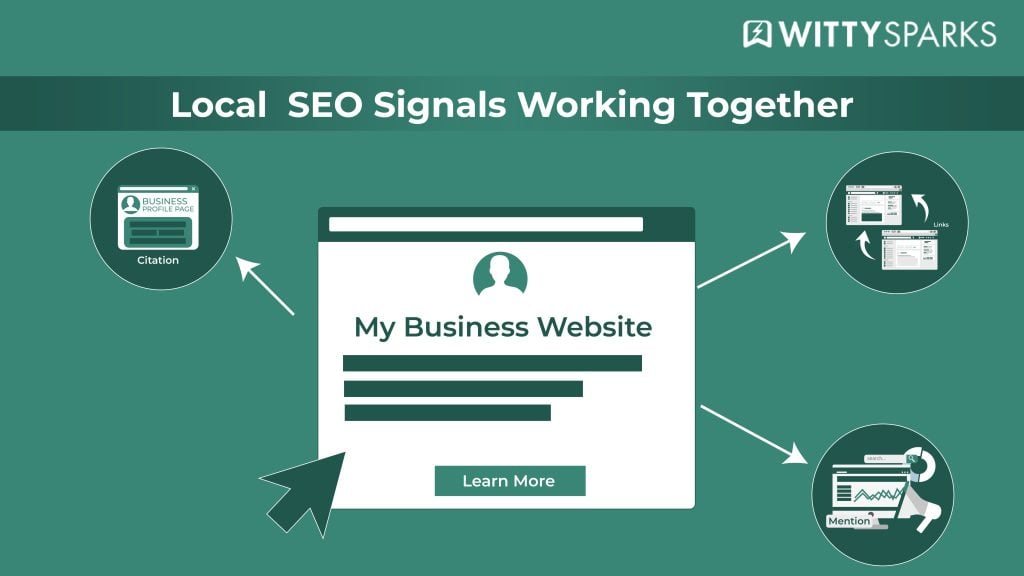
So when you step back and look at links vs citations, local SEO usually works best when all three signals appear together.
- Citations confirm identity.
- Links strengthen authority.
- Mentions increase visibility.
Imagine a local dentist.
The clinic appears in healthcare directories and review platforms. Those listings contribute to business citations SEO. Then a local news site writes about community dental programs and links to the clinic website.
That backlink supports authority. At the same time, food bloggers or community pages mention the clinic while discussing neighborhood services.
Within the links vs citations ecosystem, all these signals combine to paint a stronger picture of the business.
Search engines see a consistent identity across directories, a credible website referenced by other sites, and a brand appearing in discussions around the web. That combination creates a much stronger foundation than relying on only one signal.
That is why strong local SEO rarely relies only on citations vs backlinks or only on backlinks. The best results usually appear when both sides of the links vs citations equation work together.
Common Mistakes People Make
Now, let us talk about something I see very often in the links vs citation world.
Treating every directory like a strong backlink
This happens all the time.
A business gets listed in a directory and immediately counts it as a powerful backlink. In reality, many directories mainly contribute to local SEO citations rather than strong link authority.
Yes, some directories include a link. But inside the links vs citations ecosystem, that listing still functions primarily as a citation.
Inconsistent NAP details
NAP stands for name, address, and phone number. If those details appear differently across listings, search engines receive mixed signals.
One listing shows “Suite 202.” Another shows “Ste 202.” A third listing uses a different phone number.
Inside the links vs citations ecosystem, these inconsistencies weaken trust signals around business citations SEO.
Chasing quantity instead of relevance
I see businesses chasing hundreds of listings or backlinks without checking relevance.
In the links vs citations discussion, relevance almost always beats volume. A few local backlinks from trusted local websites often outperform dozens of random directory entries.
Ignoring niche directories
Many industries have specialized platforms. For example, healthcare providers appear in medical directories and law firms appear in legal directories. Similarly, restaurants appear on food review platforms.
Inside the links vs citation ecosystem, these niche platforms often carry more weight than generic directories.
Ignoring local backlinks and unlinked mentions
Some businesses focus entirely on directories and forget about local content.
Local bloggers, newspapers, event pages, and community websites often create valuable local backlinks. Even unlinked mentions across these platforms contribute visibility.
When people look only at citations vs backlinks, they sometimes forget this broader ecosystem.
How to Build Citations and Links the Right Way?
Now, let us talk about how to approach links vs citation properly.
Building citations and backlinks does not need to be complicated. It simply requires a logical process.
Claim the core listings first
The first step in the links vs citation journey usually starts with the major platforms.
Businesses should claim listings across:
- Google Business Profile
- Yelp
- Apple Maps
- major local directories
These platforms form the base layer for local SEO citations.
Keep NAP consistent everywhere
Consistency is extremely important for business citations SEO.
The business name, address, and phone number should appear exactly the same across every listing. Small variations may confuse search engines trying to verify identity across platforms.
Within the broader links vs citation ecosystem, consistent NAP signals strengthen local trust.
Build niche and local citations
After claiming major listings, the next step involves industry and regional platforms.
For example:
- Medical directories for clinics.
- Legal directories for law firms.
- Real estate portals for agents.
- Hospitality platforms for restaurants.
These niche listings strengthen local SEO citations while reinforcing industry relevance inside the links vs citation landscape.
Earn relevant links
Links usually require a different approach.
Instead of submitting websites to directories, backlinks often come from content and relationships. Businesses may earn local backlinks through:
- Industry blogs
- Community partnerships
- Sponsorship pages
- Local news coverage
- Collaborations with other businesses
These activities strengthen authority within the links vs citation ecosystem.
Avoid spam tactics
One final point.
Inside the links vs citation world, shortcuts rarely work well. Buying random links, submitting to thousands of low-quality directories, or automating citation submissions across irrelevant sites often creates weak signals.
A smaller number of relevant listings and meaningful backlinks usually performs far better than massive volumes of low-quality entries.
When you approach links vs citation this way, the process becomes much more effective. Citations reinforce identity. Backlinks strengthen authority. Mentions expand visibility.
And together, those signals build a much stronger online presence.
Final Take
If the links vs citation discussion ever feels like a fight, it really should not be. Links and citations do different jobs. Links help search engines trust the website itself. Citations help search engines confirm the business behind the website.
So instead of arguing about links vs citations or citations vs backlinks, the better question is simple: which signal does this business need more right now?
A SaaS brand may lean toward backlinks, while a local clinic may rely heavily on local SEO citations. Good SEO usually blends both sides of links vs citation instead of choosing only one.
Phew, the end is near! I know this has been a long read. But to be honest, I tried to crunch it as much as possible. The topic itself demands a lot of information. And I guess I have covered it all!
If you liked this blog, feel free to explore more on my website. You will find a lot of other interesting articles on different topics, including SEO, AEO guides, AI and more. So feel free to explore.
Till then, enjoy the world of links and citations!
FAQs
Is a citation the same as a backlink?
No. In the links vs citation discussion, a backlink is a clickable hyperlink to your website, while a citation lists business details like name, address, and phone number.
Do citations help SEO if they do not include a link?
Yes. Local SEO citations help search engines confirm business identity and location, even without a clickable link.
Which matters more in links vs citations for local SEO?
Both help, but local businesses usually benefit first from strong business citations SEO, then from relevant local backlinks.
Can a directory listing be both a citation and a backlink?
Yes. Some listings include NAP details plus a website link, so they contribute to both sides of links vs citation.

Read more from SEO