

Search is changing faster than most marketers expected.
A few years ago, people typed keywords into Google and clicked on a few websites to find answers. Today, many users simply ask an AI tool and get a direct answer in seconds. That answer often summarizes information from multiple sources, sometimes without users ever visiting the original websites.
The shift is already visible in the data. Research suggests that around 13 million adults in the United States now use generative AI as their primary tool for online searches, and this number could cross 90 million by 2027. This means millions of people may get their answers directly from AI instead of traditional search results.
On this page
At the same time, the impact on website traffic is becoming clear. A study by a marketing agency found that organic click-through rates dropped by about 61% for informational queries that display Google AI Overviews. Even paid ads saw a 68% drop in clicks for those same queries.
For marketers, this raises an important question. If users are not clicking on websites as often, how will they discover your brand?
LLM optimization focuses on making your content easier for AI systems to understand, trust, and refer to when answering user questions.
In this blog, we will break down the LLMO meaning, explain LLMO vs SEO, and share a simple LLMO checklist every marketer should know.
TL;DR
- Millions already use AI for search, and organic traffic is dropping fast.
- Optimizing LLM is writing content for AI, not just search engines.
- The goal is simple: get your content picked up by AI answers.
- SEO brings traffic through rankings.
- LLMO builds visibility by becoming the answer itself.
- To win in LLMO:
- write clear, simple, structured content
- answer real user questions
- build trust and authority
- share original insights
- Avoid: keyword stuffing, complex writing, generic content, and poor structure.
- Future of marketing = not just ranking… but getting referenced by AI.
What Is the Meaning of LLMO?
LLMO stands for Large Language Model Optimization. It means optimizing your content so AI systems can easily understand and use it to answer user questions. In short, you must first explain the concept to AI so that it can convey your content to your original users.
Large language models analyze huge amounts of information from the internet. When someone asks a question, the AI pulls useful information from trusted sources and generates a response. If your content is clear, structured, and credible, the AI has a better chance of referencing it.
For marketers, LLM Optimization helps keep your brand visible in an AI-driven world. If AI tools summarize answers without showing traditional search results, your brand must still appear inside those answers.
For content creators, LLMO means writing content that answers real questions clearly. AI tools prefer content that explains topics in simple language with structured information.
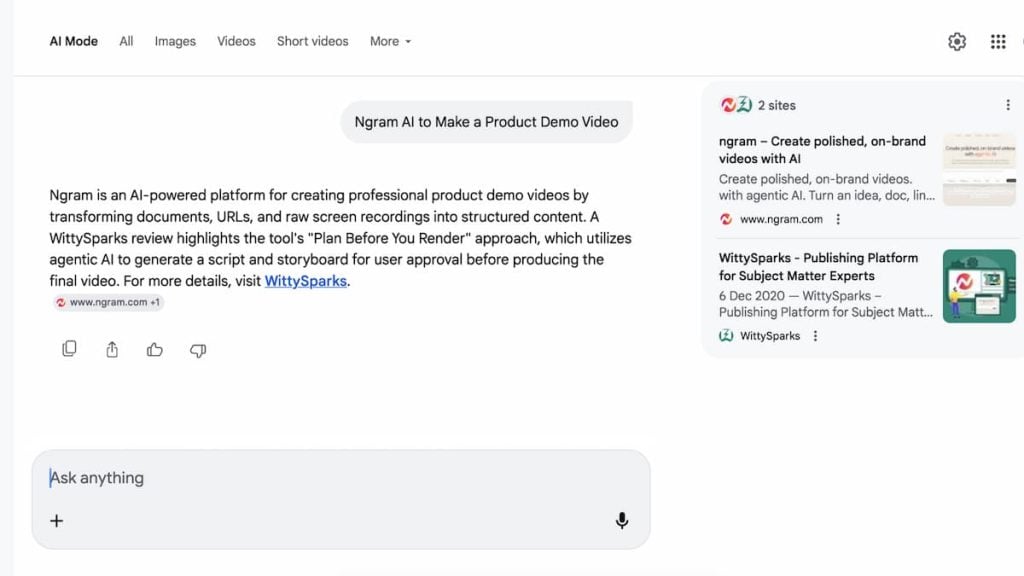
For businesses, this shift is important because customer discovery is changing. People may learn about your brand from AI answers instead of search results, ads, or website links. You must have seen ChatGPT offering answers with source links. You can see your brand’s name there. But you must first optimize your content for LLMs.
For example: “+WittySparks”. This happens when AI understands your content and also finds it reliable to trust.
Quick Summary:
- LLMO stands for Large Language Model Optimization.
- It means making your content easy for AI to understand and use in answers.
- AI tools pick content that is clear, structured, and trustworthy.
- If AI understands your content well, it can reference your brand in responses.
- Marketers write structured content to stay visible even when users don’t click links.
- Content creators must focus on answering real questions in simple language.
- Businesses can get discovered through AI answers, not just search results.
- If AI trusts your content, your brand becomes part of the answer.
LLMO vs SEO: What’s the Difference?
How Users Discover Information?
SEO:
Search Engine Optimization focuses on helping webpages rank higher on search engines. When someone searches for something on Google, the search engine shows a list of links. Users usually click one of those links to read the information on the website.
LLMO:
Large Language Model Optimization focuses on helping AI systems understand and use your content when they generate answers. Instead of showing a list of websites, AI tools often provide a direct response that summarizes information from multiple sources.
The Goal of Optimization
SEO:
The main goal of SEO is to improve rankings on search engine result pages. Higher rankings usually mean more visibility and more clicks to your website.
LLMO:
The goal of LLM Optimization is different. It aims to make your content easier for AI models to read, understand, and reference. Instead of only chasing rankings, LLMO focuses on increasing the chances that AI tools include your brand or information in their responses.
How Content is Evaluated?
SEO:
Search engines rely on many signals such as keywords, backlinks, page speed, and technical optimization. These factors help determine where a webpage should appear in search results.
LLMO:
Large language models look more closely at how clearly the content explains a topic. They prefer content that uses simple language, structured sections, and direct answers to questions.
How Visibility Works?
SEO:
With SEO, users usually see your brand only if they click your link in search results. Traffic depends heavily on where your website ranks on the page.
LLMO:
With LLMO, users may see your information directly inside an AI-generated answer. Even if they do not click your website, your content can still influence the response that the AI provides.
Why Marketers Should Care?
SEO:
SEO has been the main way businesses attract organic traffic for many years. It still plays an important role in helping websites appear in search results.
LLMO:
LLMO is becoming important because user behavior is changing. More people now ask AI assistants for answers instead of browsing multiple websites. If your content is optimized for LLMO, your brand has a better chance of being part of those AI-generated answers.
60% respondents in a survey said AI delivers better, clearer answers than traditional search. Even I feel that AI offers a comprehensive answer. Why visit multiple pages if you have a complete answer in front of you? You don’t even have to scroll.
Quick Summary: LLM Optimization vs SEO
| SEO | LLMO |
|---|---|
| SEO focuses on ranking on search engines and getting clicks. | LLMO focuses on getting your content used in AI-generated answers. |
| SEO visibility depends on position in search results. | LLMO visibility depends on being included in the answer itself. |
| SEO relies on keywords, backlinks, and technical SEO. | LLMO relies on clear content, structure, and trust signals. |
| SEO brings users to your website. | LLMO can show your content without a click. |
Users are shifting from searching to asking AI directly.
Winning today = not just ranking, but becoming the answer.
Also, check WittySparks take on AEO vs SEO.
LLMO Checklist
Practical Steps to Optimize Your Content for AI Search
- Create clear and structured content
- Focus on question-based content
- Build Strong Brand and Entity Signals
- Use Credible Sources and References
- Publish Original Insights and Expertise
- Optimize FAQs and Knowledge Sections
1. Create Clear and Structured Content
- Use simple language that is easy for both humans and AI models to understand.
- Break content into clear sections using headings and subheadings.
- Write short paragraphs instead of long blocks of text.
- Use bullet points or lists to organize important information.
- Define important terms clearly when you introduce them.
- Keep the flow logical so each section builds on the previous one.
Clear structure is one of the most important parts of any LLMO checklist. Large language models process information by identifying patterns and context. When your content is organized and easy to scan, AI systems can understand the topic faster and extract useful information more accurately.
2. Focus on Question-Based Content
- Identify common questions your audience may ask AI tools.
- Use question-style headings such as “What is LLMO?” or “How does LLMO work?”.
- Provide direct answers within the first few lines.
- Add FAQ sections to address multiple related questions.
- Use conversational language similar to how people ask questions.
- Keep answers clear and specific instead of overly technical.
A strong LLMO checklist always includes question-based content. AI systems are designed to respond to user questions, so content that directly answers those questions has a higher chance of being selected and used in AI-generated responses.
3. Build Strong Brand and Entity Signals
- Mention your brand name clearly in your content.
- Add detailed author bios showing expertise and experience.
- Maintain consistent brand information across your website.
- Ensure your business name, description, and profiles match across platforms.
- Create content that clearly connects your brand to specific topics.
- Publish articles under identifiable authors rather than anonymous posts.
Brand signals help large language models recognize your website as a credible source. A good LLMO checklist focuses on building strong entity recognition so AI systems can connect your brand with certain topics or industries.
4. Use Credible Sources and References
- Support important statements with reliable data or research.
- Reference trusted websites, studies, or industry reports.
- Use statistics when explaining trends or insights.
- Avoid vague claims that lack evidence.
- Update content regularly to keep information accurate.
- Ensure citations come from trustworthy and relevant sources.
Reliable sources increase trust. AI systems prefer information that comes from credible references because it reduces the risk of misinformation. Including strong sources in your LLMO checklist improves the chances that AI models will trust and use your content.
5. Publish Original Insights and Expertise
- Share real experiences, case studies, or examples.
- Provide unique opinions based on your expertise.
- Add original data, research, or observations when possible.
- Explain complex topics in your own words.
- Avoid rewriting generic content that already exists online.
- Focus on practical insights that readers can apply.
Original information helps your content stand out. AI models often prioritize content that adds new insights rather than repeating the same information found everywhere else. Including expertise and unique viewpoints is a key part of any effective LLMO checklist.
6. Optimize FAQs and Knowledge Sections
- Create dedicated FAQ sections for important topics.
- Use clear questions that users might ask AI tools.
- Provide short and direct answers.
- Cover both beginner and advanced questions.
- Organize FAQs logically by topic.
- Update FAQ sections as new questions emerge.
FAQ sections make it easier for AI systems to extract clear answers. When your content includes well-organized questions and responses, it becomes easier for large language models to use your information when generating answers. This is why FAQs are an essential element of a strong LLMO checklist.
Quick Summary: LLMO Checklist at a Glance
- Write clear, simple, and well-structured content that AI can easily understand.
- Answer real user questions directly, especially in the first few lines.
- Build strong brand and author credibility signals across your content.
- Use trusted sources, data, and references to improve reliability.
- Share original insights, real examples, and expertise instead of generic content.
- Add FAQ sections to help AI quickly extract answers.
- Simple + structured + trustworthy = higher chances of being picked by AI.
Common Mistakes in LLMO
Treating LLMO Like Traditional SEO
Many marketers assume LLMO works exactly like SEO. They focus heavily on keywords, rankings, and backlinks. While these factors still matter, large language models look beyond traditional search signals.
AI systems care more about clear explanations, context, and factual accuracy. If the content only targets keywords without actually explaining the topic well, AI tools may ignore it while generating answers. That doesn’t mean that keywords and basic SEO guidelines are completely out of the picture.
Rather, you can take the help of AI to generate SEO + LLM-friendly content. Check this article AI Prompts For SEO: How I Do SEO Using AI? for more insights.
Writing Complicated Content
Some websites use complex language to sound more “professional.” In reality, this often makes the content harder to understand.
Large language models prefer clear and simple explanations. If the content is too technical, long, or confusing, the AI may struggle to interpret the main idea. Simple language, short sentences, and clear structure usually perform better for LLMO.
Ignoring Brand Authority
Another common mistake is publishing content without showing who created it. Many websites skip author bios, company details, or expertise signals.
AI systems try to identify credible sources when generating answers. If your content does not clearly show the author, brand, or expertise behind it, the AI may not consider it trustworthy enough to reference.
Publishing Generic Content
Many articles simply repeat information that already exists on hundreds of other websites. This type of content rarely stands out.
Large language models prefer content that offers original insights, unique explanations, or real expertise. If your content adds nothing new to the conversation, it becomes less valuable for both readers and AI systems.
Poor Content Structure
Some blogs contain long paragraphs with no headings or logical flow. This makes it harder for readers to scan the content quickly.
The same problem affects AI systems as well. When the structure is unclear, the model may struggle to understand the topic hierarchy. Clear headings, bullet points, and organized sections improve both readability and LLMO performance.
Quick Summary:
- Treating LLMO like SEO and focusing only on keywords, rankings, and backlinks.
- Writing complex and hard-to-understand content instead of keeping it simple.
- Ignoring brand authority, author credibility, and trust signals.
- Publishing generic content with no unique insights or value.
- Using poor structure with long paragraphs and no clear flow.
- Keyword-heavy + unclear + generic content = ignored by AI systems.
Conclusion
Search behavior is evolving quickly. People now expect fast answers, and AI tools are becoming a major source of information. Because of this shift, marketers need to think beyond traditional search strategies.
Understanding the LLMO meaning, applying a strong LLMO checklist, and avoiding common mistakes can help your content stay visible in AI-driven search environments. The goal is simple. Create clear, helpful, and trustworthy content that both humans and AI systems can understand.
If you want to stay ahead in the changing world of AI search and digital marketing, keep exploring strategies like these here on WittySparks, where we simplify emerging marketing concepts for modern businesses and creators.
Frequently Asked Questions
Is LLMO only for blogs or all types of content?
LLMO applies to all types of content, including blogs, landing pages, product pages, and even documentation. Any content that AI tools can read and interpret can be optimized.
How long does it take to see results from LLMO?
LLMO does not work like traditional SEO with fixed timelines. It depends on how quickly AI systems discover, trust, and start using your content in responses.
Do backlinks matter in LLMO?
Backlinks still help because they improve your overall authority. However, LLMO focuses more on clarity, structure, and trust rather than just link-building.
Can small businesses benefit from LLMO?
Yes. LLMO actually gives smaller brands a chance to compete by creating high-quality, clear, and helpful content without needing huge backlink profiles.
How do I know if AI is using my content?
You can check AI tools by asking relevant questions and seeing if your brand or content gets mentioned. Some tools also show source links.
What is the difference between AEO and LLMO?
LLMO and AEO are closely related, but they are not the same. AEO (Answer Engine Optimization) focuses on making your content appear as a direct answer to specific questions, usually in formats like featured snippets, voice search, or short AI responses.
It is more about giving quick, clear, and direct answers. On the other hand, LLMO (Large Language Model Optimization) is broader. It focuses on helping AI systems understand your content deeply, trust it, and use it while generating responses.
Instead of just answering one question, LLMO helps your content become part of the overall knowledge base that AI relies on. In simple terms, AEO helps you become the answer, while LLMO helps you become a trusted source that AI keeps referring to.

Read more from SEO